MANAGING HYPERMOBILITY
Supports, Bracing & Helpful Tools
Exploring practical supports, adaptive equipment and everyday tools that can help you move, participate and manage daily life with greater comfort.
REFRAMING SUPPORTS
Support is a strategy, not a setback
Living with symptomatic hypermobility can mean that everyday activities require more effort than they might for someone else. Tasks like standing to prepare a meal, walking around the shops, writing, working or getting dressed may place additional demands on joints, muscles and energy.
While building strength, stability and tolerance can be valuable parts of management, they aren't the only approaches available.
Braces, mobility aids, adaptive equipment and other supportive tools can help reduce physical demands, improve comfort and make activities more accessible.
Some people use these supports every day. Others use them only for particular activities, during symptom flares or when their capacity is lower.
Using a support doesn't mean you've given up on improving your function. It means you're finding ways to participate in life with the body and capacity you have today.
SUPPORTING YOUR JOINTS
Bracing, splinting & joint support
Braces, splints, compression garments and taping can provide additional support for joints that feel unstable, uncomfortable or difficult to control.
Different supports work in different ways. Some help limit excessive movement, others provide compression or sensory feedback, and some may make particular activities more comfortable or manageable.
The right option depends on your symptoms, the joint involved and what you're hoping the support will help you do.
Supporting yourself through a flare
-
![Photo by <a href="https://unsplash.com/@cdc?utm_source=unsplash&utm_medium=referral&utm_content=creditCopyText">CDC</a> on <a href="https://unsplash.com/photos/a-woman-in-a-wheel-chair-opening-a-cabinet-ehOJSy36Rfg?utm_source=unsplash&utm_medium=refe]()
Bracing
Braces provide external support to joints that feel unstable or painful. They range from flexible supports to more structured designs that limit particular movements.
WHEN MIGHT IT HELP?
Supporting unstable joints during everyday activities.
Limiting painful or excessive movements.
Making physically demanding tasks more manageable.
WHAT TO CONSIDER
Choose a brace suited to the joint and activity.
Look for a comfortable fit that doesn't unnecessarily restrict movement.
More rigid support isn't always better. The right level of support depends on your needs.
-
![Photo by <a href="https://unsplash.com/@sunday2sunday?utm_source=unsplash&utm_medium=referral&utm_content=creditCopyText">SUNDAY II SUNDAY</a> on <a href="https://unsplash.com/photos/a-woman-squatting-on-the-floor-in-a-gym-snM3yEpvklU?utm_source=unsp]()
Splints
Splinting
Splints help support or limit movement at specific joints. They can range from small, flexible supports to more rigid designs, including finger ring splints that help prevent excessive hyperextension.
WHEN MIGHT IT HELP?
Supporting hypermobile fingers or thumbs during writing, typing or gripping.
Limiting painful or excessive joint movements.
Improving comfort and control during fine motor tasks.
WHAT TO CONSIDER
Splints should support the movement you need without unnecessarily restricting function.
Ring splints require careful sizing and may need adjustment as swelling or symptoms change.
Different designs suit different joints and activities.
HELPFUL RESOURCES
Links to finger splint suppliers, hand therapy resources or fitting guides.
-
![Photo by <a href="https://unsplash.com/@galibagi?utm_source=unsplash&utm_medium=referral&utm_content=creditCopyText">GALINA BOGDANOVA</a> on <a href="https://unsplash.com/photos/woman-performing-a-barbell-lunge-exercise-in-a-gym-DVstISE8p8w?utm_sourc]()
Balance Movement & Rest
During a flare, your tolerance for movement and activity may change. Some days, gentle movement feels helpful. Other days, more substantial rest is what your body needs. Neither is a failure.
THIS MIGHT LOOK LIKE:
Change positions regularly if staying in one position makes you uncomfortable.
Take a short, gentle walk around the house if movement feels helpful.
Break up activities with rest rather than waiting until you're completely exhausted.
Lie down or recline between tasks if that helps you recover.
Swap your usual exercise for a gentler option, or skip it altogether for now.
Rest and movement don't have to be all-or-nothing. What feels manageable today might be different tomorrow.
-
![Photo by <a href="https://unsplash.com/@jballantyne?utm_source=unsplash&utm_medium=referral&utm_content=creditCopyText">Jesse Ballantyne</a> on <a href="https://unsplash.com/photos/woman-doing-yoga-W5zTPoCVai0?utm_source=unsplash&utm_medium=referral&]()
Reducing demands
Physical activity isn't the only thing that draws on your capacity. Noise, light, concentration, decision-making, emotions and social expectations can all feel harder to manage when symptoms are elevated.
THIS MIGHT LOOK LIKE:
Put your phone on Do Not Disturb and reply to messages when you have the capacity.
Dim the lights, close the curtains, wear sunglasses or use headphones if sensory input feels overwhelming.
Postpone a difficult conversation or a decision that doesn't need to happen today.
Give yourself permission to leave a social event early, or not attend at all.
Choose a familiar meal, outfit or routine to reduce unnecessary decisions.
Swap a demanding task for something easier, or take a break from screens and information overload.
Sometimes reducing the demands around your symptoms can make them a little easier to manage.
-
![Photo by <a href="https://unsplash.com/@joelvalve?utm_source=unsplash&utm_medium=referral&utm_content=creditCopyText">JoelValve</a> on <a href="https://unsplash.com/photos/woman-doing-split-while-standing-on-one-leg-eWAK-rslNn0?utm_source=unsplash&ut]()
Reach for support
You don't have to manage every flare on your own. Support can be practical, emotional or clinical, and asking for help doesn't mean you've failed to manage your symptoms.
THIS MIGHT LOOK LIKE:
Ask someone to pick up groceries, medication or something you need from the shops.
Let a friend or family member know you're having a difficult symptom day.
Ask someone to help with dinner, household tasks or caring responsibilities.
Send a simple message: “I'm having a rough flare today. Could you check in on me later?”
Tell someone what would actually help, whether that's practical assistance, company or some quiet time.
Contact your healthcare team if symptoms are new, unusually severe, concerning or aren't settling as expected.
You deserve support before things become completely unmanageable.
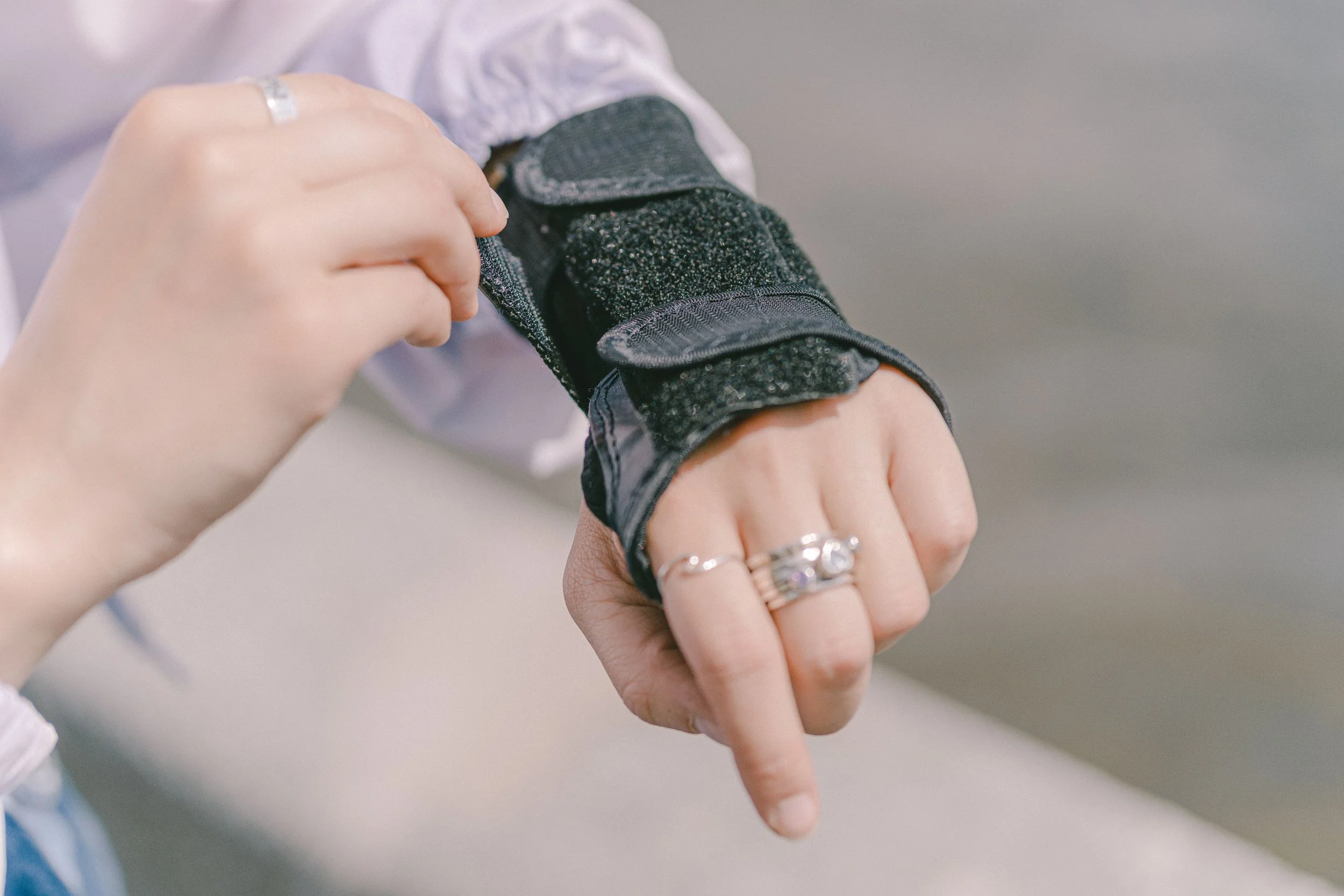
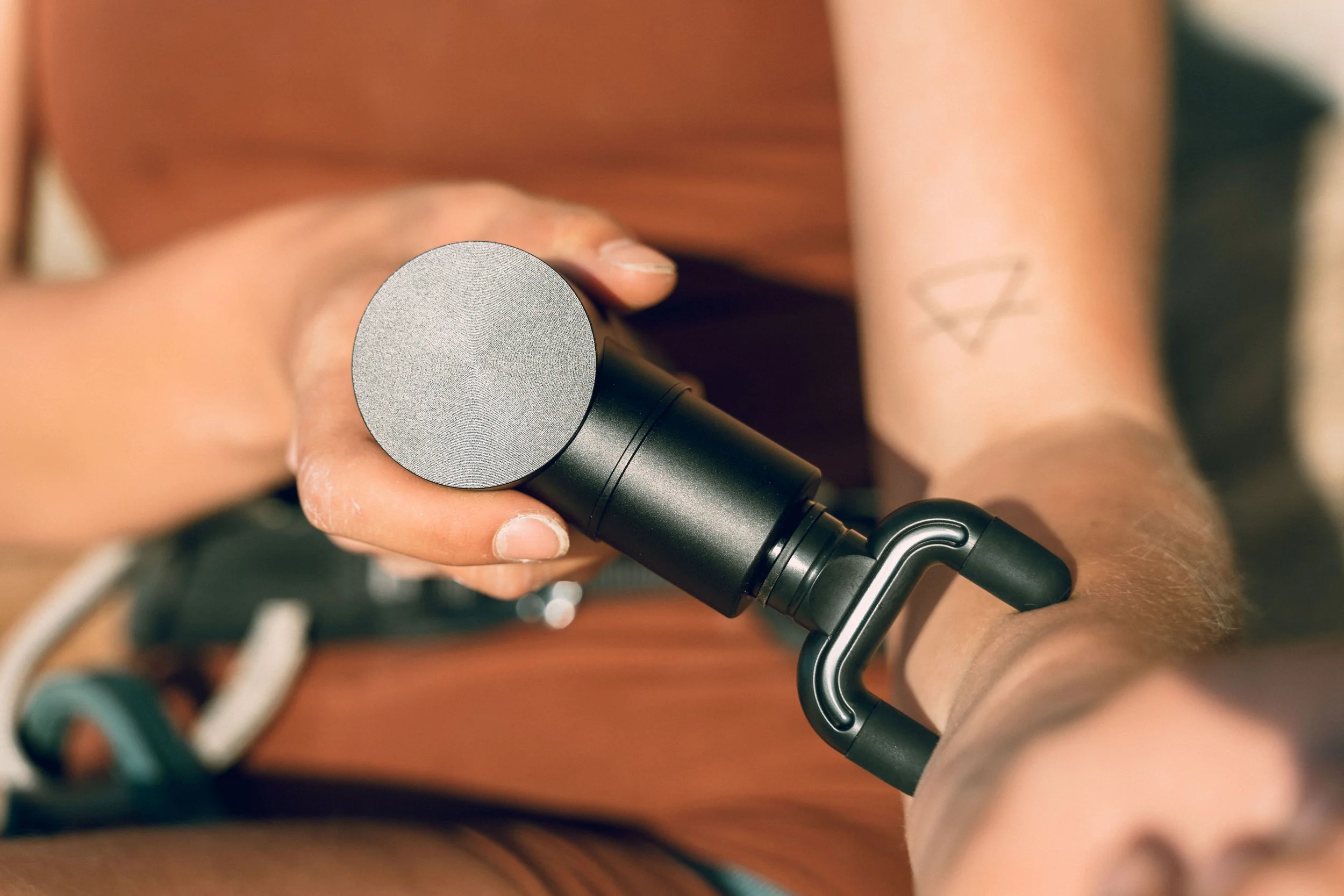

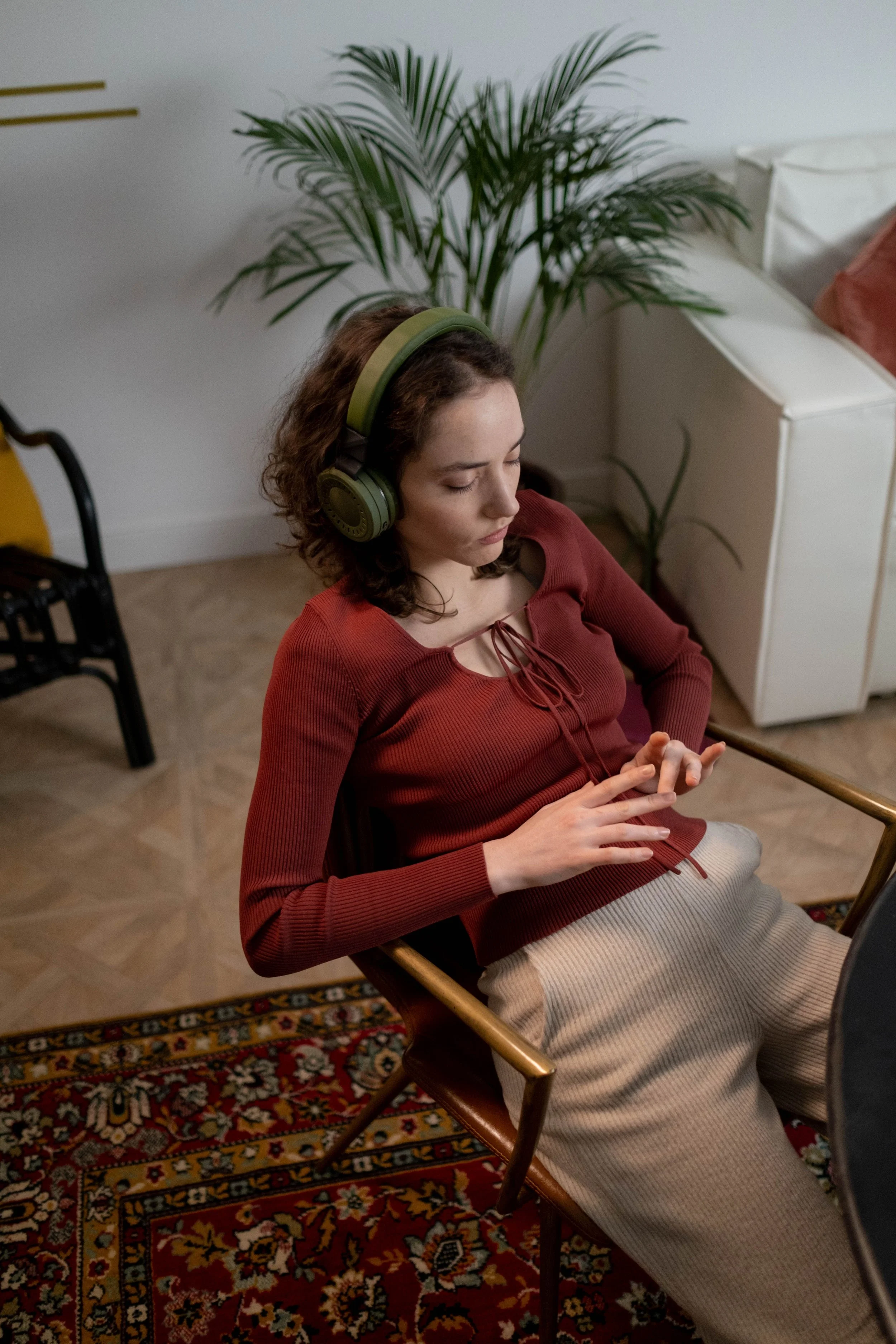

One thing I genuinely couldn't live without is my little flare caddy. It lives on my bedside table, stocked with safe snacks, pain-relief options like my stick-on heat patches, my braces, scalp massager and eye mask.
On the days when my symptoms flare and getting around is difficult, having everything within arm's reach means one less thing to think about, and one less reason to get up when my body needs rest.
— Bec, Osteopath & fellow hypermobile human
What would you keep in yours?
FINDING YOUR FEET AGAIN
When the flare begins to settle
After flares where you’ve had to slow down, it can be temping to jump back into the never ending to do lists when you’re feeling better. But feeling better doesn't always mean your usual capacity has fully returned.
Trying to catch up on everything at once can sometimes contribute to another increase in symptoms, creating a repeating pattern of overdoing it, flaring and needing to recover. This is often called the boom–bust cycle.
Rather than trying to make up for lost time, consider gradually reintroducing activities, spreading demanding tasks across several days and allowing some flexibility as you find your rhythm again.
KNOWING WHEN TO REACH OUT
When to seek additional support
Living with persistent pain or fluctuating symptoms can make it difficult to know when something needs further attention. When you're accustomed to managing discomfort, it can be easy to dismiss new symptoms or assume they're simply another flare.
But having hypermobility doesn't mean every symptom is caused by it, and you shouldn't have to manage everything on your own.
You don't need to wait until your symptoms become unbearable to ask for help.
When to check in with your healthcare team:
Your symptoms are new, significantly different or worsening.
A flare is lasting longer than usual or isn't responding to familiar strategies.
You experience new weakness, numbness or changes in movement.
Your symptoms are increasingly affecting sleep, daily activities or quality of life.
You're struggling to manage or would benefit from additional support.
When to seek urgent medical attention:
Some symptoms need urgent assessment, including sudden or severe neurological changes, chest pain, significant breathing difficulties or new loss of bladder or bowel control.