LIVING WITH HYPERMOBILITY
Understanding Protective Patterns
Why your body may brace, guard and adapt.
THE BODY RESPONDS
Your body is constantly adapting to what it experiences.
Your body is constantly making small adjustments in response to what it experiences.
When something feels painful, unstable, unfamiliar or difficult to control, your body may change the way it moves, loads or supports that area. These changes can be part of the body's normal protective response.
Sometimes this is obvious — like limping after hurting your ankle. Other times, the changes can be much more subtle.
The important thing to understand is that these responses often have a purpose. Your body is trying to solve a problem.
WHAT PROTECTION CAN LOOK LIKE
Protection doesn't always look like protection.
It can be surprising to recognise how many things we experience as ‘normal’ may actually be ways our body has learned to create stability or protection.
You might brace or hold tension without realising it. Avoid certain movements. Move differently through one side of your body. Feel apprehensive about positions that have caused symptoms before. Or find that activities which once felt easy now require much more effort.
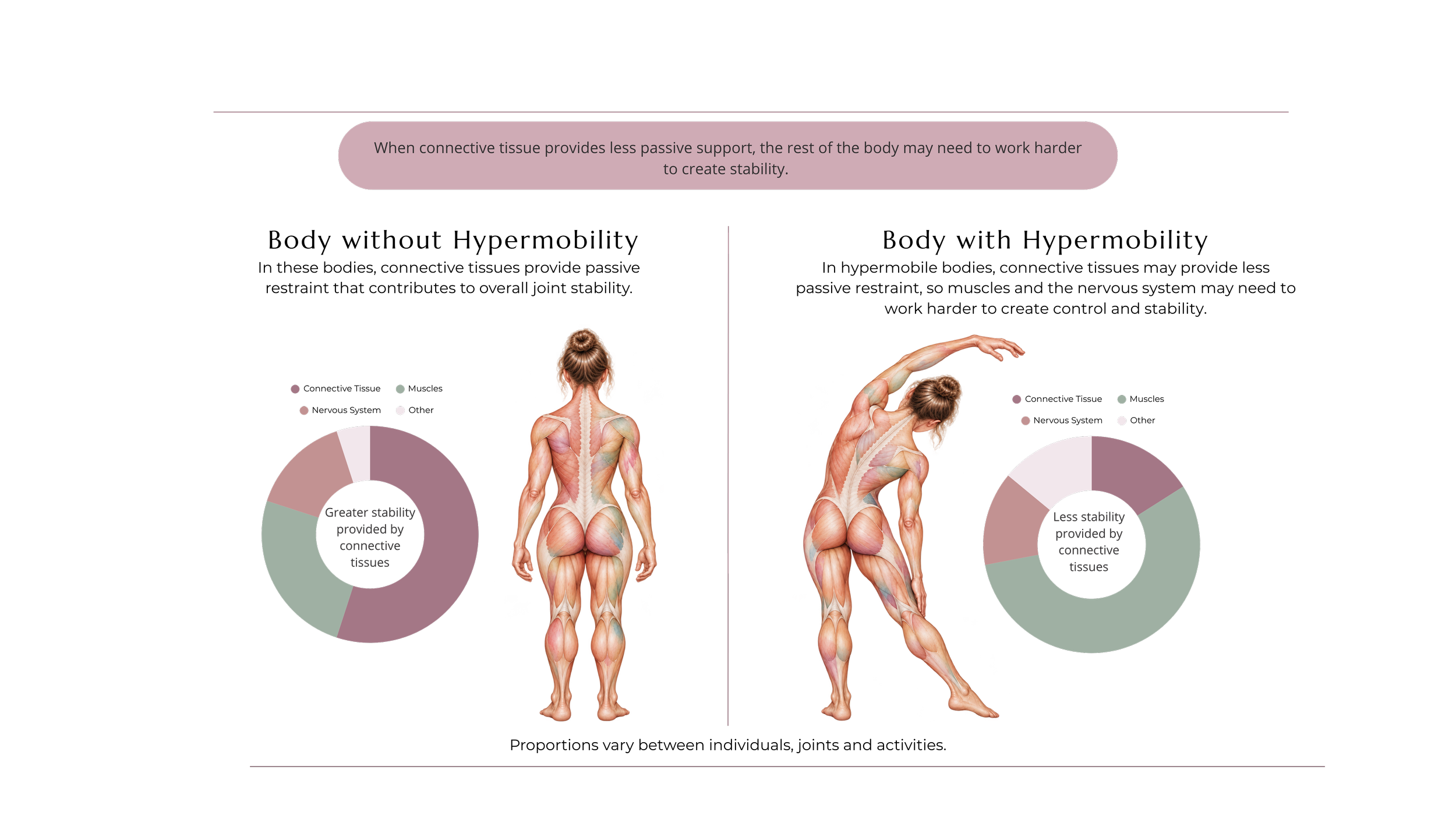
Our bodies also often use muscular tension to create extra stability and compensate for more lax connective tissue. This is often why we can feel so stiff and tight, despite being hypermobile!
Pain, muscle tension, altered movement, fatigue and avoidance can all become part of the way your body responds to something it perceives as difficult or threatening.
That doesn't mean your symptoms are imagined, or that you're doing anything wrong. It means your body is doing what it's designed to do! It’s trying to protect you.
WHEN PROTECTION STICKS AROUND
A useful response can become less useful over time.
Protective responses are there for a reason. If something feels painful, unstable or difficult to control, your body may respond by bracing, increasing muscle tension, changing the way you move or avoiding that movement altogether.
In the short term, these responses can be really useful.
But when your body experiences pain, instability or irritation repeatedly, it can start to anticipate the need for protection. Your nervous system gets very good at recognising situations that have caused problems before, and may respond earlier, or more strongly, in an attempt to keep you safe.
Over time, that can mean bracing before you actually need to. Holding more muscle tension than the task requires. Avoiding movements your body could safely perform. Or using so much effort to create stability that movement becomes exhausting.
Your body has a reason for responding this way. But sometimes, the very thing it is doing to protect you can start contributing to your symptoms.
This is why simply loosening a tight muscle, repeatedly treating the painful area more aggressively, or forcing yourself through pain doesn't always solve the problem.
THE BOOM-BUST PATTERN
Doing too much, then crashing, can become a difficult cycle.
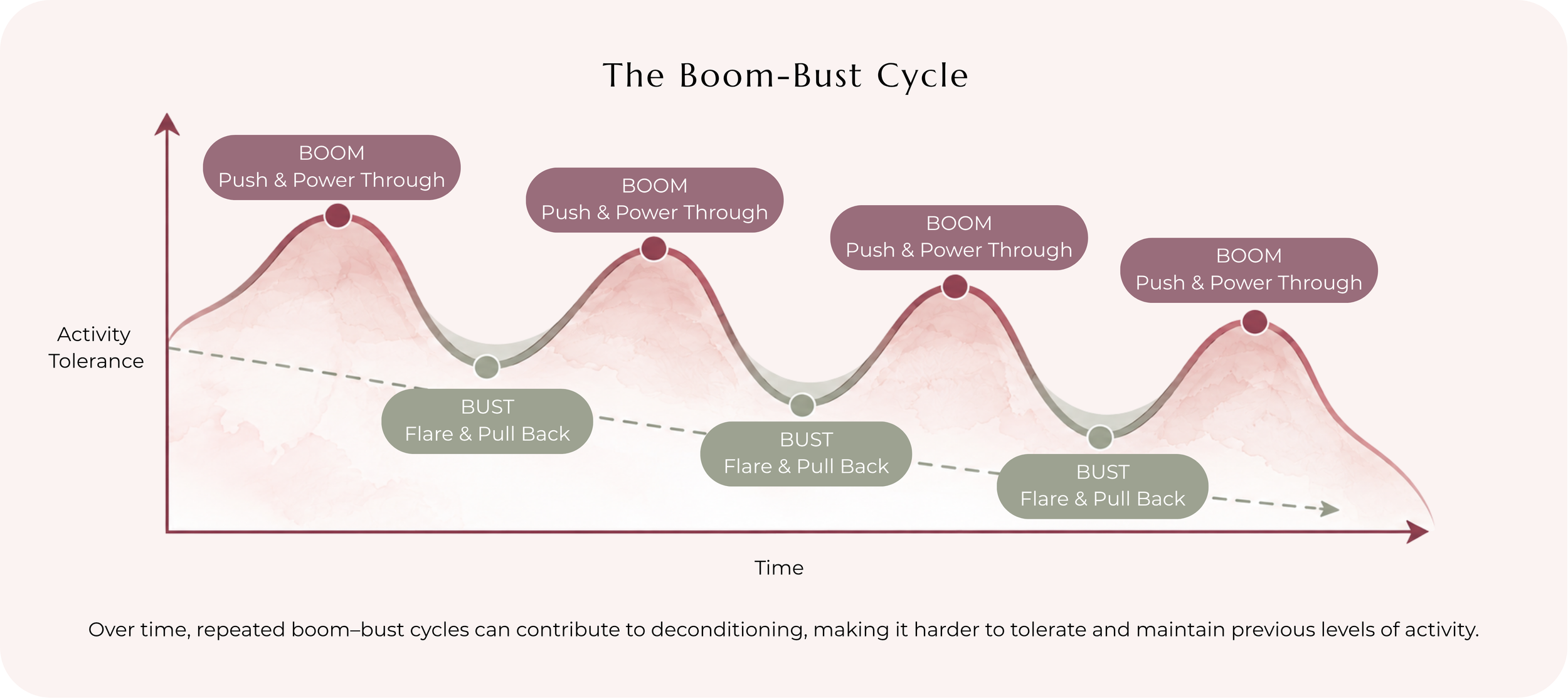
The boom–bust cycle refers to the fluctuating ups and downs people can experience in their symptoms, activity and function.
This cycle often looks something like:
Boom: On a ‘better’ day, it can be tempting to make the most of feeling better and do much more than usual. This sudden increase in activity or demand can contribute to a “bust”.
Bust: Symptoms then increase or flare, and you may need to significantly reduce your activity and spend more time resting or recovering.
As the cycle repeats, these large swings in activity can make it difficult to build consistent capacity. The amount your body is being asked to tolerate keeps changing.
For some people, repeated periods of overactivity followed by significant reductions in activity can also contribute to deconditioning and a gradual reduction in what their body is able to tolerate.
The aim isn't to avoid rest or force yourself through symptoms. It's to gradually find a level of activity your body can recover from, and build from there.
WORKING WITH PROTECTION
The goal isn't to fight your body.
Management isn't about forcing your body to stop protecting itself. It's about finding better ways to help your body feel supported and build capacity.
That might involve improving strength or joint control, changing how an activity is performed, managing load, addressing an underlying contributor, allowing adequate recovery, or gradually rebuilding tolerance to something you've been avoiding.
Sometimes the protective response needs support. Sometimes the thing driving it needs addressing. Often, it's a bit of both.
Understanding this can help you move away from fighting individual symptoms and towards asking a more useful question:
What might my body be responding to?