Understanding hEDS & HSD
Understanding the different labels used when hypermobility becomes symptomatic.
When does hypermobility become a disorder?
Joint hypermobility itself is a physical characteristic, not automatically a disorder. In many people, the presence of joint hypermobility is simply a normal part of their lives that causes no issues or symptoms.
However, when hypermobility is associated with persistent pain, instability, recurrent injuries or other problems affecting function, we start talking about symptomatic hypermobility. This is where diagnoses such as HSD and hEDS may begin to be considered.
A clinical assessment then looks at the pattern of hypermobility, symptoms, history, other physical and systemic features, and whether another condition may better explain the presentation.
FROM HYPERMOBILITY TO DIAGNOSIS
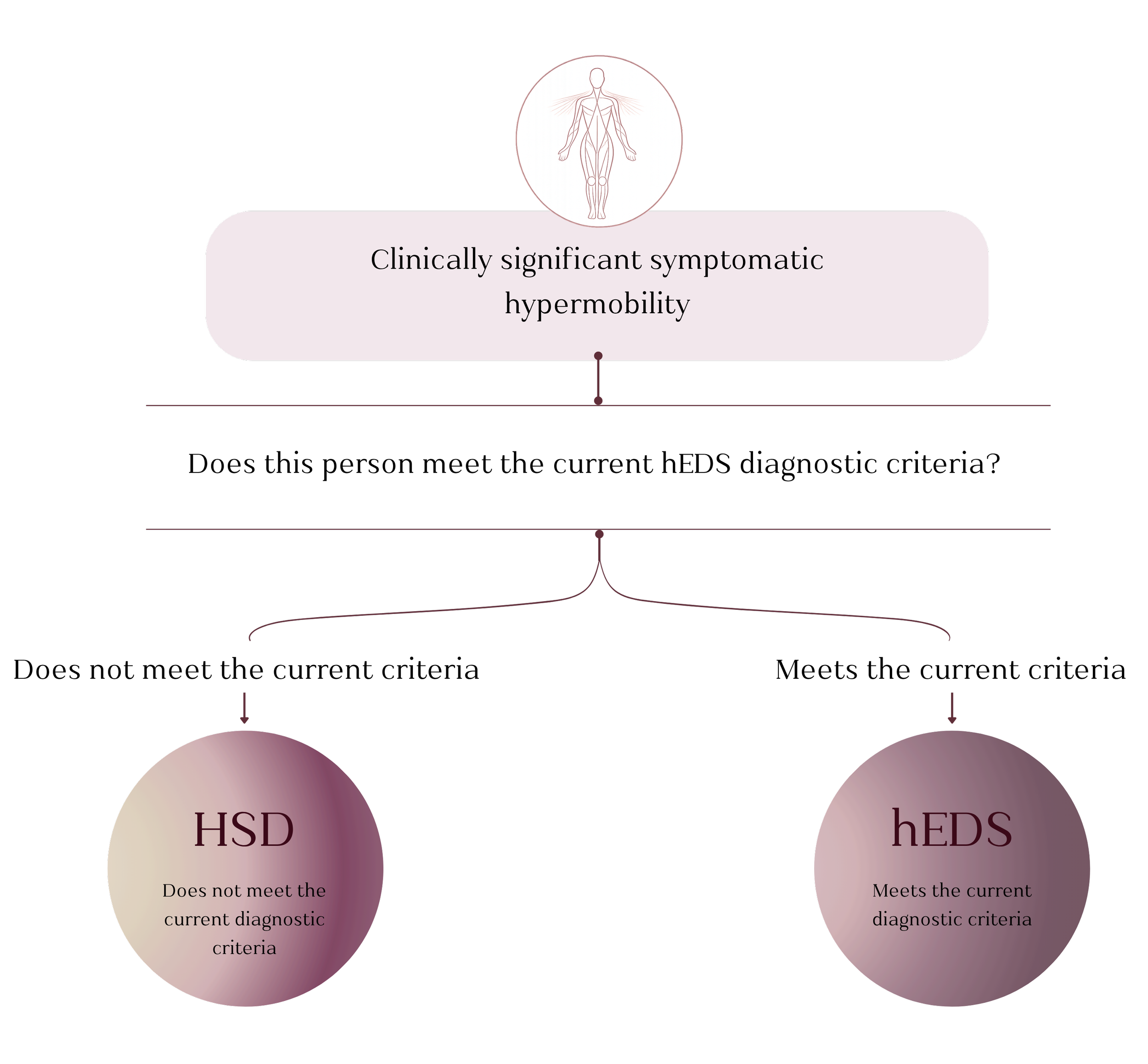
HSD and hEDS are two diagnostic labels used within symptomatic hypermobility.
When joint hypermobility is associated with symptoms or functional difficulties, assessment looks at the overall pattern- including the distribution of hypermobility, musculoskeletal symptoms, connective tissue features, family history and whether another condition could better explain the presentation.
Under the current diagnostic framework, hEDS has a specific set of clinical diagnostic criteria. HSD is diagnosed when symptomatic joint hypermobility is present but the presentation is not better explained by hEDS or another condition.
There can be substantial overlap between the two. The distinction is based on diagnostic criteria, not a simple scale of how symptomatic or disabled someone is.
UNDERSTANDING THE LANDSCAPE
Hypermobility Spectrum Disorder (HSD)
HSD is used to describe symptomatic joint hypermobility when the presentation isn't better explained by another condition, such as hEDS or another heritable connective tissue disorder.
HSD can involve pain, instability, recurrent injury and functional difficulties, alongside broader symptoms and associated conditions in some people.
Importantly, HSD does not mean mild hypermobility or less severe symptoms. Someone with HSD can experience significant symptoms and impacts on their everyday life.
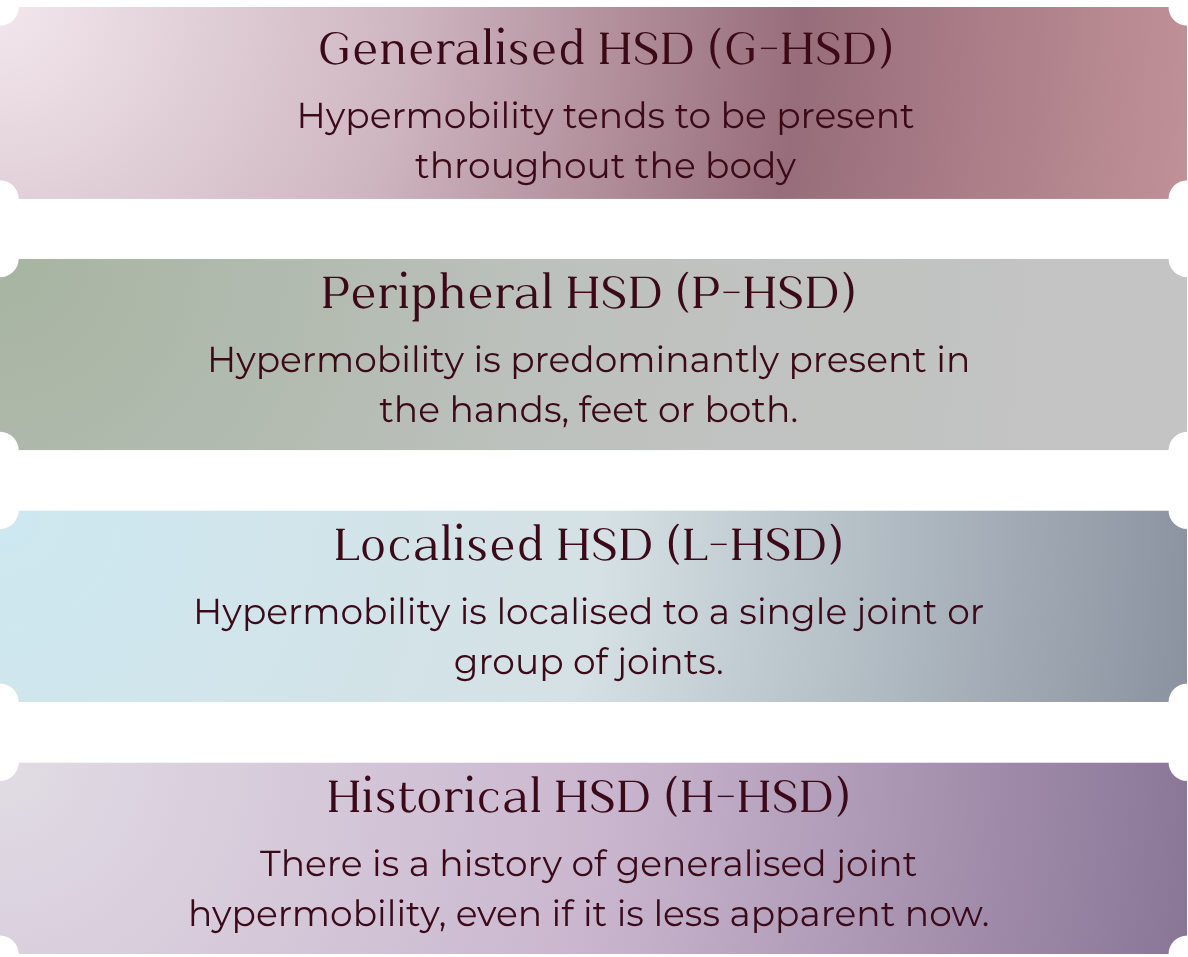
Different patterns of HSD
HSD can be described in different patterns depending on where hypermobility is present in the body. These describe the distribution of hypermobility — not how severe someone's symptoms are.
UNDERSTANDING HSD
Hypermobile Ehlers-Danlos Syndrome (hEDS)
hEDS is a heritable connective tissue disorder and one of the Ehlers-Danlos syndromes. Unlike the other currently classified EDS types, the genetic cause or causes of hEDS have not yet been established, so there is currently no genetic test that can confirm the diagnosis. Diagnosis is therefore based on clinical criteria.
hEDS is one way symptomatic hypermobility may be described when a person meets specific diagnostic criteria.
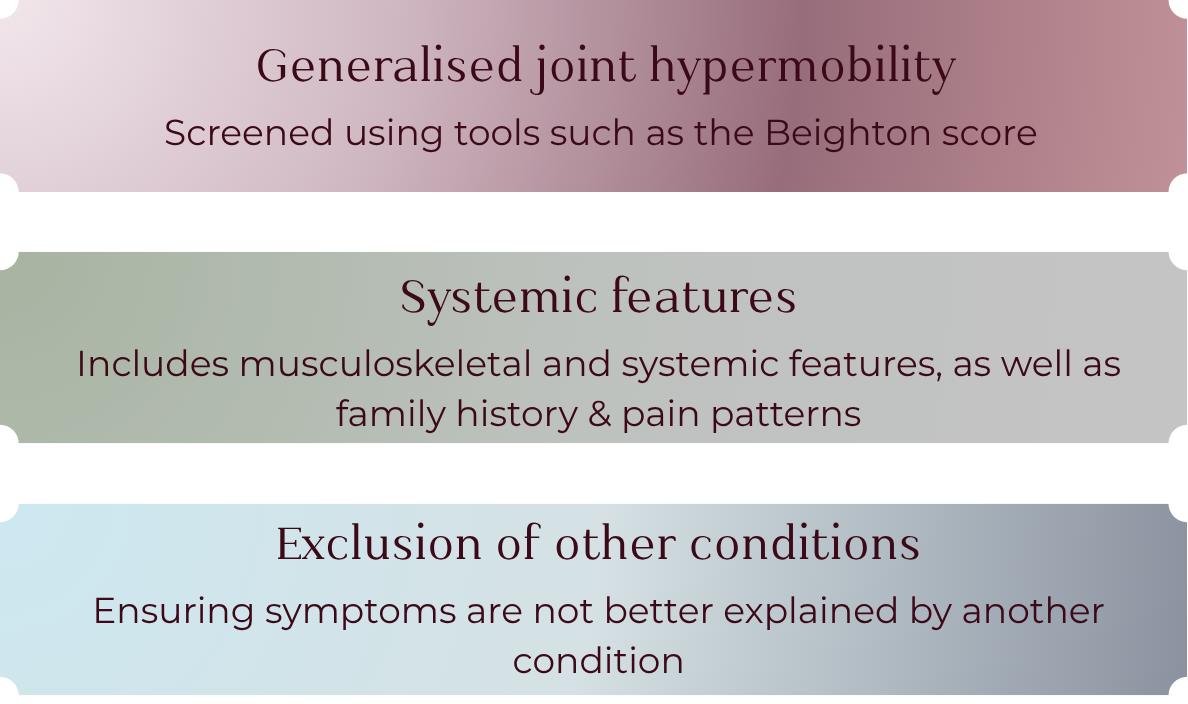
Under the current diagnostic framework, hEDS is assessed using three broad components:
UNDERSTANDING hEDS
About the Beighton score
The Beighton score is a screening tool used to assess generalised joint hypermobility- NOT a definitive measure of hypermobility.
It does not capture all presentations of hypermobility and should be interpreted within the broader clinical context, particularly where symptoms or history suggest hypermobility is present.
Different diagnoses can share a very similar experience.
HSD and hEDS are distinct diagnoses, but there can be substantial overlap in their clinical presentations.
People with either diagnosis may experience pain, instability, recurrent injuries, fatigue, reduced function and broader associated symptoms.
The distinction is based on diagnostic criteria, not how severely someone is impacted.
Our understanding of the relationship between hEDS and HSD is still evolving. Current research supports substantial overlap between the two presentations, and the international diagnostic framework is currently being reviewed and updated.
A new international classification for EDS and HSD is scheduled for publication in December 2026. Anasa will update this information as the diagnostic framework changes.
THE OVERLAP

Diagnosis isn't a severity scale.
Diagnostic labels can be useful. They give us language to describe patterns, can guide appropriate investigation and help healthcare professionals communicate about care.
But a diagnosis doesn't tell us everything about the person living with it.
Two people with hEDS may have very different symptoms and support needs. Someone with HSD may be considerably more affected than someone with hEDS, or vice versa.
Good care should be guided by the person's symptoms, function, goals and individual needs, rather than assuming what someone needs based on their diagnostic label alone.
THE LABEL ISN'T THE WHOLE PICTURE