Understanding Your Symptom Pattern
Your symptoms don't exist in isolation. Looking at when, where and how they occur can help build a clearer picture.
LOOKING BEYOND ONE SYMPTOM
A symptom is only one piece of the puzzle.
When we look at a symptom on its own, we can miss the information around it.
When does it happen? What triggers it? What else happens at the same time? What makes it better or worse?
Noticing patterns around symptoms can often tell us much more than the symptom alone.
Example:
I get dizzy

I feel dizzy and nauseous, and when I feel this I notice my heart races and my vision gets a bit blurry. I notice that this mostly happens when I stand for too long, get up quickly, or when I get too hot. And everything feels better when I lie down.
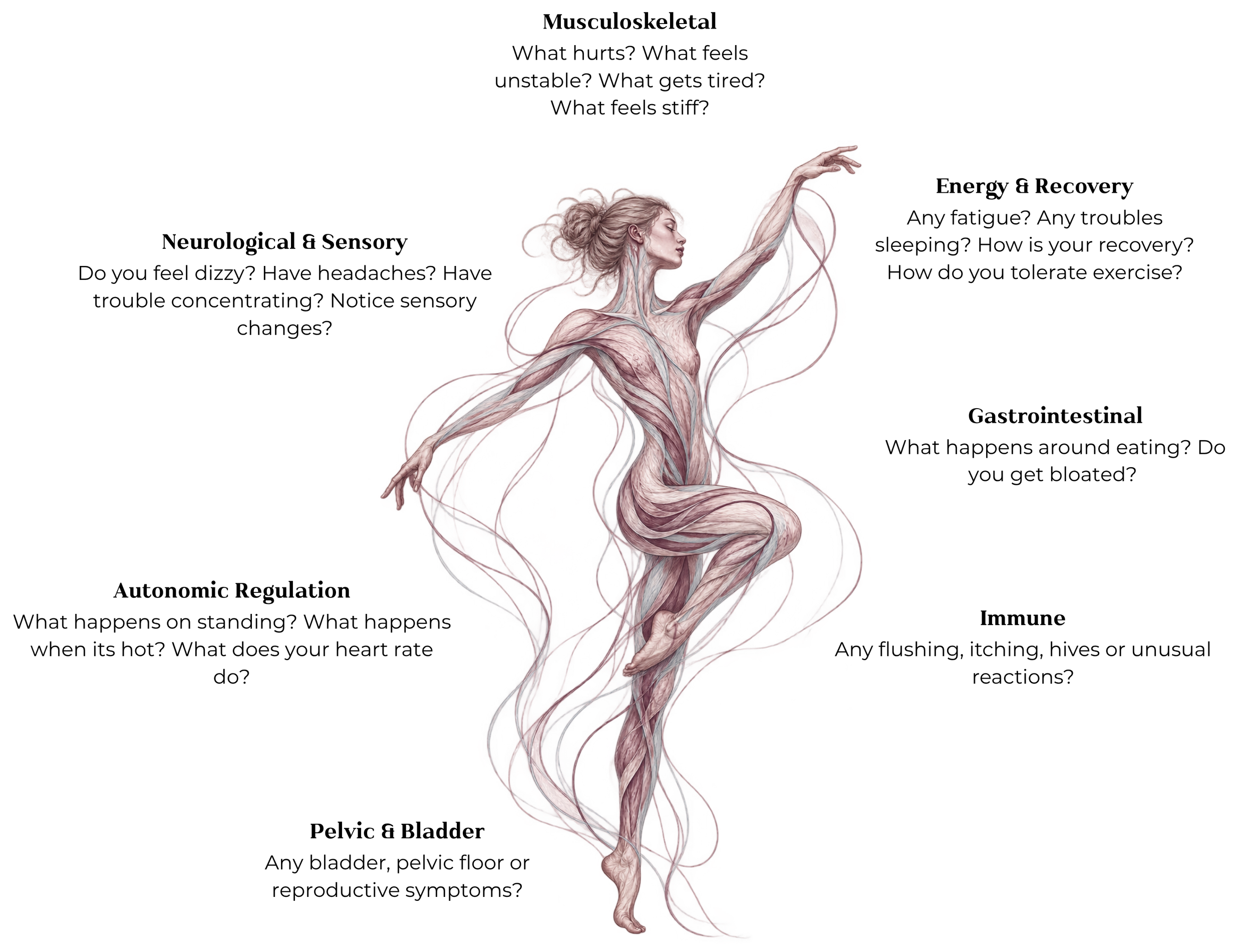
MAPPING THE WHOLE BODY PICTURE
Sometimes the connections sit across different body systems.
Once you start noticing which symptoms occur together, it can help to step back and look at which body systems seem to be involved.
You might notice that most of your symptoms relate to one system, or that your health picture involves several systems at once.
Mapping symptoms across different body systems can make a complicated health picture easier to see — and may highlight connections that weren't obvious when each symptom was considered separately.
NOTICE WHAT CHANGES
Symptoms are dynamic.
Symptoms can change from day to day, and sometimes even from hour to hour.
You might notice that something you manage relatively well one day feels much harder on another, or that certain symptoms become more noticeable at particular times.
Rather than assuming these changes are random, it can be useful to notice what else was happening around them.
Things like:
· Sleep · Activity · Illness · Stress · Heat · Hormonal changes · Eating and drinking · Having a busy few days
Can all influence how you feel.
You don't need to work out exactly why something changed. For now, just notice what seems to change with it.
MAKING YOUR PATTERNS USEFUL
A clearer picture can help guide better care.
Noticing patterns isn't about trying to diagnose yourself or finding an explanation for every symptom.
It's about turning a complicated health experience into information that's easier to understand and communicate.
Being able to describe what happens, things that tend to happen alongside it, what seems to influence it and how it affects your everyday life can give you and your healthcare team a clearer place to start.
Some patterns might point towards something worth investigating. Others might help you understand what your body finds difficult, or what seems to help.
You don't need to have the answers before asking for help. Sometimes recognising your patterns is enough to know what to explore next.