MANAGING HYPERMOBILITY
Managing Load, Energy & Recovery
Understanding how to balance activity and recovery, manage your energy and gradually build what your body can tolerate.
MORE THAN JUST MOVEMENT
Everything you do asks something of your body.
When we talk about managing load, it's easy to think we're just talking about exercise, lifting things or how much physical activity we do.
But load is much broader than that.
It's the demands placed on your body and the systems that help you function throughout the day.
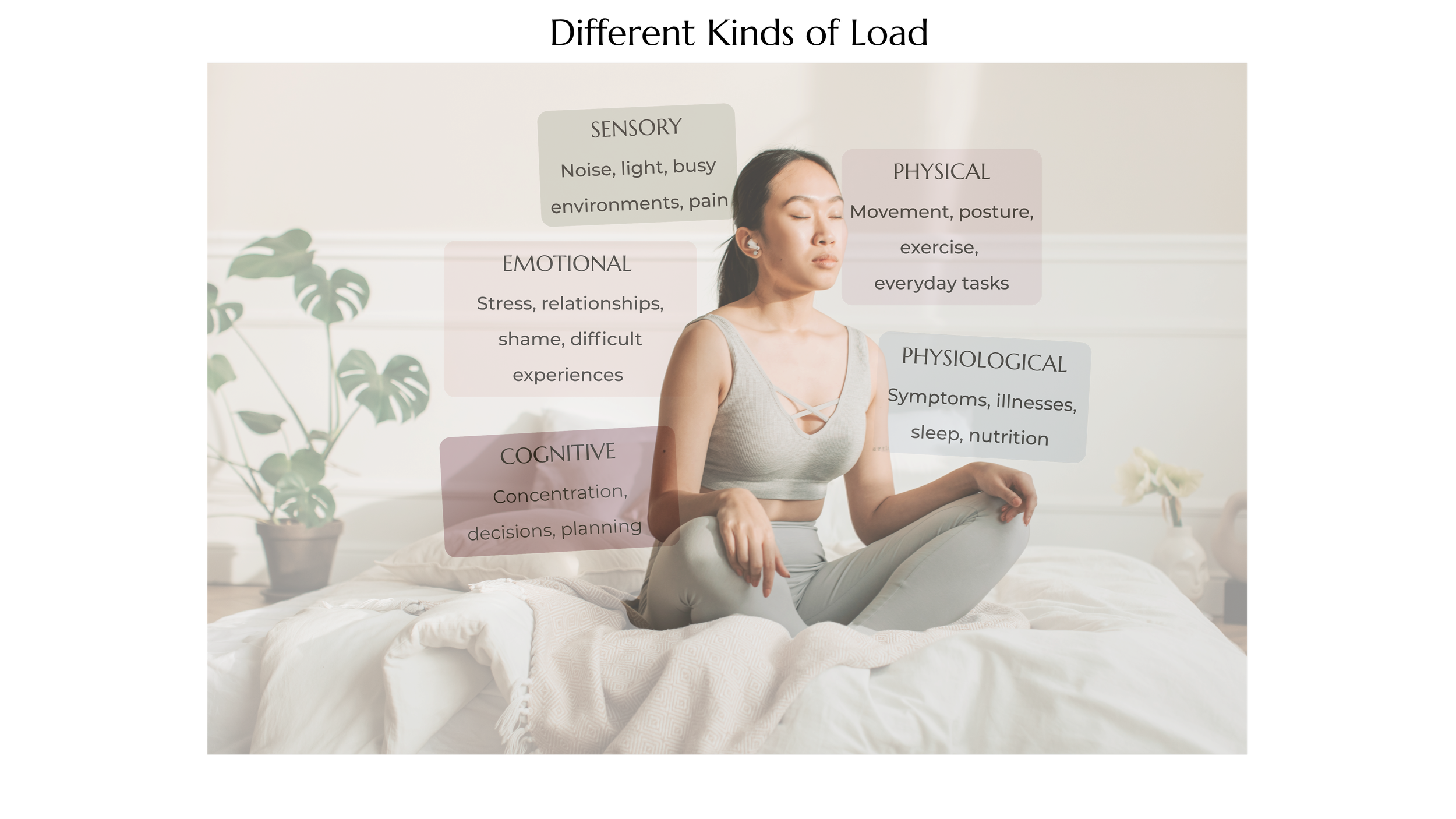
That might include physical activity, but also concentrating at work, navigating a busy environment, managing pain, processing emotions, maintaining relationships, attending appointments or simply getting through everyday tasks.
And these demands don't always happen separately.
You might have a physically quiet day that's mentally exhausting. Or spend a day doing things you love, only to realise afterwards just how much energy they required.
Something doesn't have to look physically demanding to take a lot out of you.
The important thing is that different demands can interact, and the amount you can comfortably manage may change depending on what else is happening in your body and your life.
LOAD & CAPACITY
Your capacity it always changing, so your loads need to too.
Your capacity is how much physical, cognitive, emotional and physiological demand you can manage at a particular time.
And importantly, capacity is ever changing. Some days, your body might tolerate a busy workday, exercise and seeing friends afterwards. Other days, getting dressed, making breakfast and attending an appointment might already be a lot.
Your capacity can be influenced by many things, including sleep, symptoms, stress, recovery, illness and what you've been doing in the days beforehand.
The same activity can feel manageable one day and overwhelming another because the amount of capacity you have available has changed.
When load and capacity don't match
When the demands placed on your body exceed what it can currently manage or recover from, symptoms may increase.
You might notice more pain, fatigue, brain fog, autonomic symptoms, difficulty concentrating or a greater need for recovery.
That doesn't mean every symptom flare is caused by doing too much, or that exceeding your capacity automatically causes harm.
But understanding the relationship between load and capacity can help explain why seemingly ordinary activities sometimes feel disproportionately difficult.
Managing load isn't about avoiding everything that challenges you. It's about finding ways to work with your available capacity while gradually building what your body can tolerate.
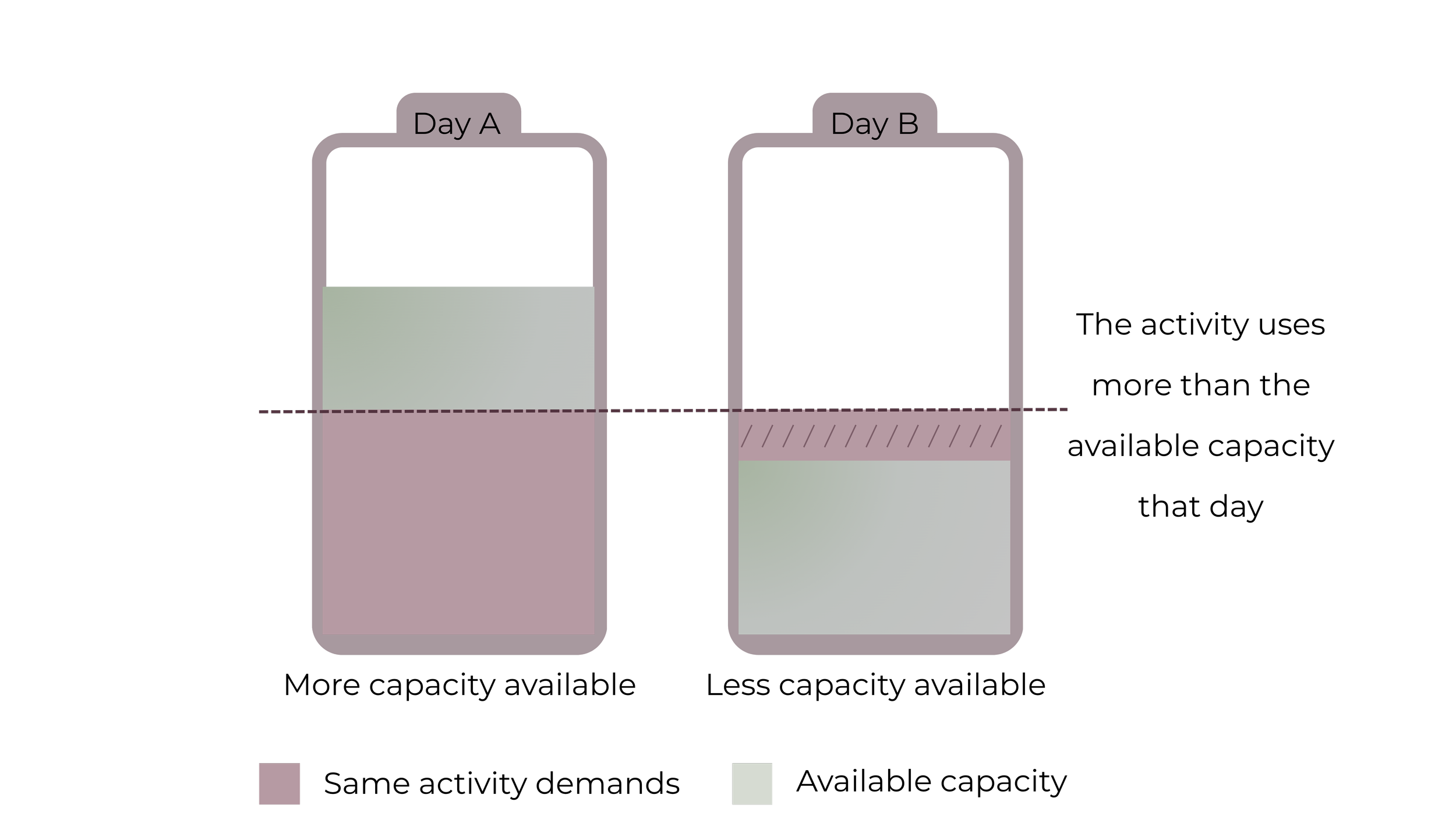
When the demands placed on your body exceed your available capacity, you might experience an increase in symptoms or need more time to recover. But a flare doesn't automatically mean you've caused tissue damage, and it doesn't mean you've done something wrong.
WORKING WITH YOUR CAPACITY
Pacing… it’s not just about doing less.
Pacing is a way of managing how you use your energy and capacity throughout the day, by balancing activity, rest and recovery.
Rather than waiting until you're completely exhausted or your symptoms have significantly increased before stopping, pacing involves thinking about how much an activity demands of you, how your body responds, and what recovery you might need.
It's about finding a more manageable balance between what you're asking your body to do and what it currently has the capacity to manage.
But importantly, pacing doesn't simply mean resting more, avoiding activity or doing as little as possible.
It can involve:
Breaking things up: spreading a demanding activity across smaller periods rather than doing everything at once.
Changing how you do something: using equipment, support or a different approach to reduce the demands of an activity.
Alternating demands: switching between activities that place different demands on your body or brain.
Planning recovery: allowing time to recover before or after something particularly demanding.
Prioritising what matters: deciding where you want to spend your available capacity, rather than using it all on things you feel you should do.
And sometimes, pacing means choosing to do something you know might increase your symptoms because it's important to you, enjoyable or worth the trade-off.
That's a valid choice, too.
The goal isn't to organise your entire life around avoiding symptoms. It's to develop a better understanding of your capacity and find ways to use it that support both your health and the things that matter to you.
Note:
For people who experience post-exertional malaise (PEM), increasing activity can cause significant or prolonged symptom exacerbation. In these circumstances, pacing may need to focus on managing activity within current energy limits rather than gradually increasing activity.
And progress doesn't always mean doing more. It might mean completing an activity with greater comfort or confidence, needing less time to recover, or maintaining your current capacity during a particularly demanding period.
MAKING SPACE FOR RECOVERY
There’s so many ways to rest.
Rest and recovery aren't always about sleep, lying down or doing nothing. Sometimes, what we need most is a break from a particular kind of demand.
Different forms of rest can support different needs, and what feels restorative for one person might not feel restorative for another.
These forms of rest can overlap. And something that helps you recover in one area might still require capacity in another.
For example, catching up with a friend might be emotionally restorative but physically demanding. Spending time outdoors might help you mentally unwind while still requiring energy to get there.
The aim isn't to achieve every type of rest. It's to recognise what feels depleted and explore what might help.
FINDING YOUR OWN BALANCE
Making room for the life you want to live.
Living with symptomatic hypermobility can mean making decisions about how you use your capacity, sometimes in ways other people don't have to think about.
But managing your load isn't about perfectly balancing every activity, preventing every flare or always making the most sensible choice.
Some days, you might choose to conserve your energy. Other days, you might decide that something meaningful, enjoyable or spontaneous is worth the possibility of increased symptoms or a longer recovery.
Neither choice makes you better or worse at managing your health.
Your needs, priorities and capacity will change. What works during one period of your life might not work during another, and strategies that once helped may need to be adapted or set aside.
The aim isn't to become perfectly disciplined at managing your body. It's to develop the understanding and flexibility to make choices that support your health, your circumstances and the life you want to live.
And when things don't go to plan, that doesn't mean you've failed. It simply means you have more information to work with.